No. 02 · Resurfacing old walls
Skim coating. Keep the walls. Lose the patchwork.
Walls and ceilings that are rough, patched, cracked or stripped of wallpaper, resurfaced in thin coats of compound until they read as one smooth surface again, with the plaster, trim and casings left where they are.

About skim coating
Older walls keep a record: decades of paint, patches from every plumber and electrician, the ridges of old wallpaper seams, fine cracks that open and close with the seasons. In flat light they pass. In a window’s side light they all show.
A skim coat treats the whole surface, not just the worst spots. Thin coats of joint compound are spread across the wall and wiped back tight, filling the low places and burying the patchwork, so paint sits on one even skin.
Nothing has to be torn out. The plaster stays, and so do the trim, the doors and their casings. Randy’s own line: “You don’t need a new house. Revive & restore your old home.”
A skim coat can’t hold up a wall that is loose underneath, so the repairs come first: loose plaster reattached, cracks taped, holes filled solid.
When it’s called for
When a wall needs skimming
After wallpaper comes down
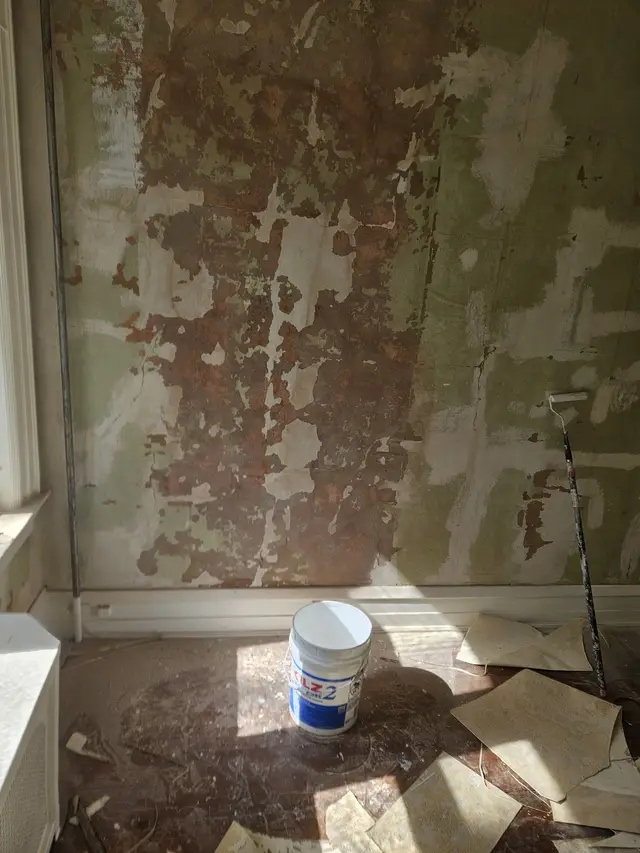
Stripping paper leaves torn facing, paste residue and seams pressed into the wall. Sealed and skimmed, the wall can take paint again.
Years of patches
Each repair may be sound on its own; together, in side light, they read as a map. A skim coat makes them one wall again.
Sound but rough plaster
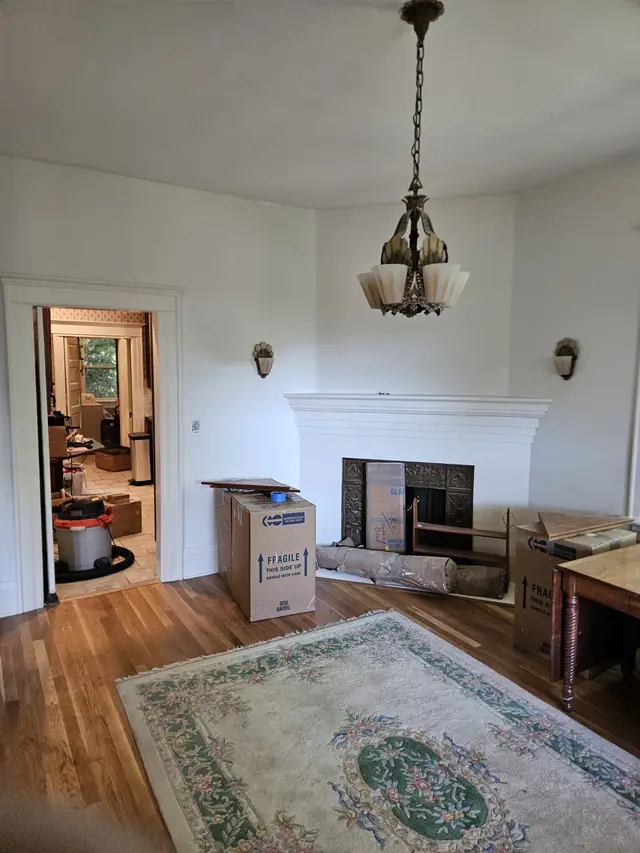
Plaster that is firmly attached but wavy, crazed with fine cracks, or pitted under layers of old paint.
Ceilings that dip
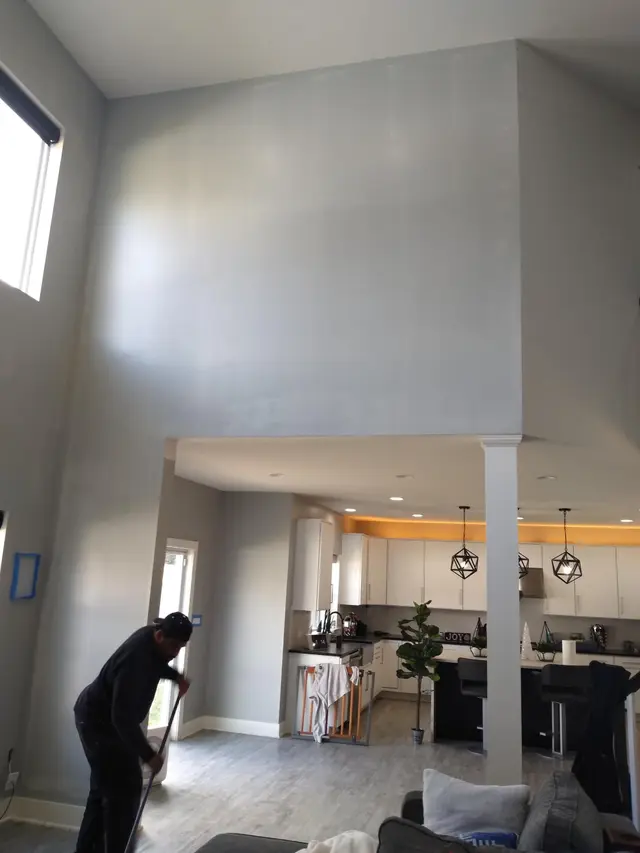
A ceiling with low spots, old patches or ridged joints, built up in coats until it reads even from below.
Before a dark or glossy color
Deep colors and sheen show everything. Skimming gives an existing wall the smooth face that Level 5 gives new drywall.
The work
How the work goes

Walkthrough and estimate
Randy walks the rooms with you, looks at how sound the plaster and old paint are, and explains what each wall needs. The walkthrough and written estimate are complimentary.
Repairs first
Loose plaster is reattached, cracks are opened and bridged with mesh tape, and deep holes are filled with setting-type compound, which shrinks less than ordinary joint compound. A skim over an unsound wall only hides the problem for a while.
Clean, dull, seal
Walls are washed and glossy paint is dulled so the compound can grip. Torn paper facing and leftover wallpaper paste are sealed with an oil- or shellac-based primer, because water in the compound would make them bubble.
Thin coats, edge to edge
Compound is spread over the whole wall and wiped back tight, then left to dry hard before the next pass. Thin coats, never one heavy one: thick compound shrinks and cracks as it dries.
Sand, prime, paint
The dry wall is sanded smooth and cleaned of dust. Primer evens out how the surface absorbs, so the paint dries to the same sheen everywhere.
From the job sites


“This was a difficult job since ceiling was not level and it required many layers to cover and bring to level. Randy and his team returned multiple times and made it prefect. Pleased with results”
“Excellent work repairing my ceiling with new drywall & painting my home. Randy is meticulous and professional. The ceiling looks brand new & my walls look smooth & even. He is very easy to work with & always showed up on time…”
Questions
Asked at the walkthrough.
Is it cheaper to skim coat or replace drywall?
It depends on the wall. On a sound wall, skimming avoids tear-out, disposal and new board, and the trim and plaster stay where they are. On board that is water-soaked, crumbling or moldy, replacing that section is the right repair, and skimming over it would only hide the problem. The walkthrough settles which; the cost depends on the room and is set in the written estimate.
What are the disadvantages of skim coating?
It takes time, because every coat has to dry before the next. Sanding makes fine dust, so the room has to be closed off. And it can’t fix what is wrong underneath: loose plaster, a moving crack or a damp wall will come back through unless it is repaired first.
Can I skim coat over an existing painted wall?
Yes, if the paint is sound. Glossy paint is dulled or primed with a bonding primer so the compound grips, and anything loose or peeling is scraped back first. Over failing paint, the skim coat fails with it.
Can old plaster walls be skim coated?
Yes, as long as the plaster is firmly attached. Fine cracks are taped, loose areas are reattached, and chalky old paint is primed first. Skimming lets sound plaster stay where it is and still take a smooth finish.
Is skim coating the same as a Level 5 finish?
Close cousins. Level 5 is the drywall standard’s name for a skim coat over new board; skim coating applies the same idea to walls that already exist, whether painted, patched or plaster. The finished surface is meant to be just as smooth.
How long does skim coating take?
Longer than painting alone. Each coat has to dry hard before the next, and compound dries slower in cool, damp air, so the house needs heat and air moving through it. As Randy puts it, “We don’t rush projects — we perfect them.”
Will cracks come back after skim coating?
A crack that is opened, bridged with mesh tape and set in setting-type compound before the skim is far less likely to return than one that is simply filled. A crack that keeps widening means something is moving, and that is a question for a structural engineer before it is one for a finisher.
Where
Skim coating, town by town.
Randy works from Easton across the Lehigh Valley and Bucks County. Choose your town for what skim coating involves in its houses.
Lehigh Valley
Related
Often done together.


Consultation
Request a private consultation.
Private walkthrough & written estimate, complimentary. Tell us a little about the house and the rooms, and Randy will be in touch to arrange a time.
- Hours
- Monday – Friday8:30 AM – 5:30 PMSaturday10 AM – 3 PMSundayClosed
- Service area
- Easton, Bethlehem, Allentown and the greater Lehigh Valley; Bucks County, Pennsylvania.
Fully insured — proof on request. Residential and commercial.