No. 01 · The signature finish
Level 5 drywall. No seams for the light to find.
The top grade in the drywall standard. Every joint is taped and finished, then the whole surface is skimmed in compound, so low sun, wall-washers and dark or glossy paint meet one even skin.

About level 5 drywall finish
Most drywall is finished to Level 4: joints and screw heads covered, the paper face of the board left as it is. Under flat paint and soft light, that is enough.
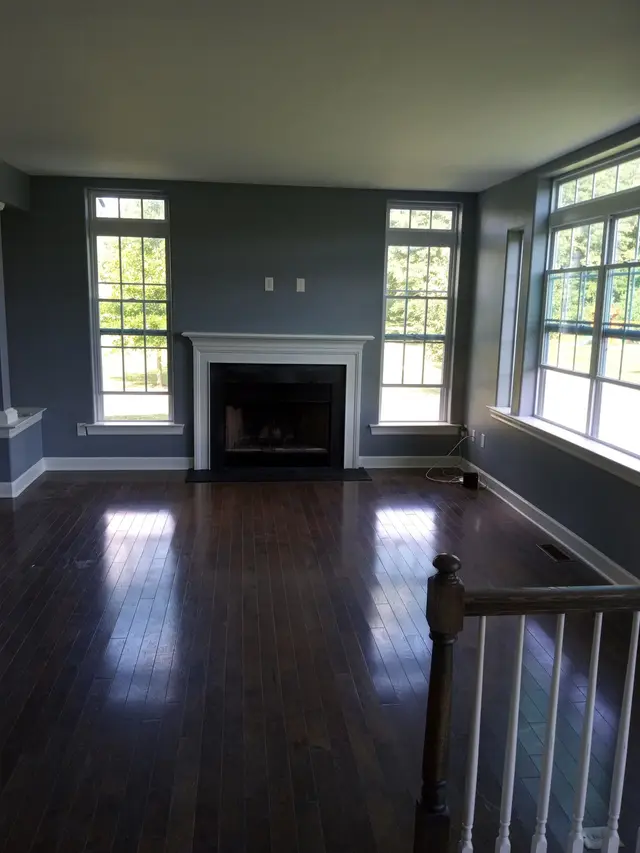
Change the light or the paint and the wall changes. Sun low across a long wall, a wall-washer over a painting, eggshell instead of flat, a deep navy: each one shows the difference between paper and compound, and the taped joints surface as faint bands.
Level 5 adds a skim coat over the entire surface, so paint lands on one consistent skin. It is the finish Randy is best known for. In his words: “We built our reputation… one coat at a time.”
Not every room needs it. A hall in flat white may not; a two-story wall beside a run of tall windows probably does. The walkthrough decides, room by room.
When it’s called for
When a wall calls for Level 5
Strong side light
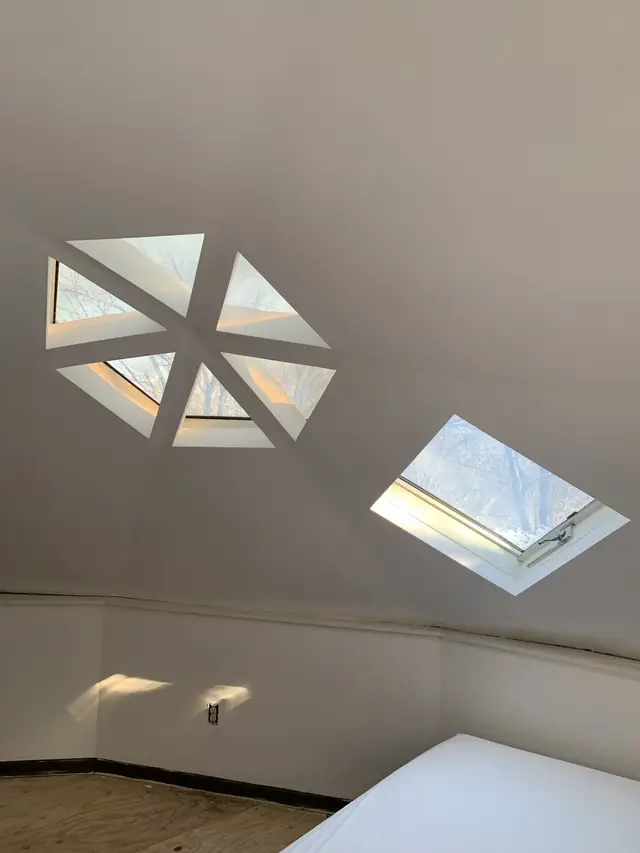
Tall windows, skylights, a long wall the low sun runs along. Light that grazes a surface exaggerates every ridge and joint in it.
Wall-washers and picture lights
Fixtures aimed down a wall throw the same raking light, and the drywall standard treats strong light from fixtures like light from windows.
Any sheen above flat
Eggshell, satin and semi-gloss reflect light off every small difference in the surface. The standard recommends Level 5 under all of them.
Dark and deep colors
Charcoal, navy, deep green. Strong colors magnify whatever is underneath them, even in a flat finish.
Levels 0 to 5, in plain words
The Gypsum Association’s GA-214 standard grades drywall finishing in six steps. Level 0 is board hung and nothing more. Level 1 beds tape in compound at the joints, enough above a ceiling or in an attic. Level 2 adds a thin coat over the tape and covers the screw heads once, for garages, storage rooms and walls that will be tiled.
Level 3 adds a separate coat over the joints and a second over the screws, for walls that will get a medium or heavy texture. Level 4 adds one more: two coats over the flat joints, three over the screws. It is where most drywall lands, and it suits flat paint, light texture and wallpaper.
Level 5 is Level 4 plus a skim coat over the entire surface. The standard recommends it for paint with any sheen, for dark and deep colors, and wherever strong side light from windows or fixtures crosses a wall, and calls it the most effective way to keep joints and fasteners from showing through paint.
Even Level 5 is not dead flat; the standard says plainly that a perfectly flat gypsum surface isn’t possible. Joints are built up in wide, gentle arcs so they cast no hard shadow. What Level 5 removes is the patchwork of paper and compound that shows through paint.
The work
How the work goes

A walkthrough in the room’s light
Randy walks the rooms with you and says which walls need Level 5 and which don’t. It helps to look at the hour the light is hardest. The walkthrough and written estimate are complimentary.
Joints finished to Level 4
Tape is bedded in compound at every joint; flat joints get two more coats, inside corners one, screw heads three. Each coat dries hard before the next, with the house kept warm and steady.
A skim coat, edge to edge
Compound is spread over the entire surface and wiped back tight with a wide knife or trowel, leaving a thin film over paper and joints alike. Where one pass doesn’t cover, a second follows.
Sanded, then primed
The dry surface is sanded smooth without scuffing the paper beneath. Primer goes on before any color, so the finish coats absorb evenly across the whole wall.
Judged in its own light
Finish coats go on last. The standard’s test is the one that counts: the wall seen from five feet back, under the light the room will actually have.
From the job sites


“he clearly knows a lot about drywall finishing.”
Questions
Asked at the walkthrough.
Is a Level 5 drywall finish worth it?
In a room with strong side light, paint with any sheen, or a dark color, yes. It is the finish the drywall standard recommends for exactly those conditions, and the most effective way to keep taped joints from showing. In a room with flat paint and soft light, Level 4 usually serves; the walkthrough settles it, and the cost depends on the room and is set in the written estimate.
What is considered Level 5?
Level 5 is the highest grade in the Gypsum Association’s GA-214 standard: all the joint work of Level 4, plus a thin skim coat of joint compound, or a material made for the purpose, over the entire surface. The result is one uniform skin, so paint absorbs and reflects the same way over paper and joints.
How many coats does a Level 5 finish take?
Under GA-214, tape is bedded at every joint, flat joints get two more coats, inside corners one, and screw heads three; then the whole surface is skimmed. The standard sets no thickness or number of passes for the skim, only full coverage, and on many walls that takes more than one pass.
Is a Level 5 finish the same as plaster?
No. A Level 5 skim is a thin film of joint compound over drywall, and the standard itself notes that skim coating won’t approximate a plastered surface. It gives drywall a smooth, even face for paint, not the hardness or density of real plaster.
Can existing walls be brought to Level 5?
Strictly, Level 5 is written for new drywall. The same idea, a skim coat over the whole surface, works on existing walls and old plaster once anything loose is repaired and the old paint is sound. That work is skim coating, and it can bring an older room to the same smoothness.
When should Level 5 happen in a renovation?
Late, once the trades that bump walls are done and the house is closed in and heated. Joint compound needs steady temperature and humidity to dry well, and the standard warns that touch-ups after the final finish can be hard to hide.
Where
Level 5 drywall finish, town by town.
Randy works from Easton across the Lehigh Valley and Bucks County. Choose your town for what level 5 drywall finish involves in its houses.
Lehigh Valley
Related
Often done together.


Consultation
Request a private consultation.
Private walkthrough & written estimate, complimentary. Tell us a little about the house and the rooms, and Randy will be in touch to arrange a time.
- Hours
- Monday – Friday8:30 AM – 5:30 PMSaturday10 AM – 3 PMSundayClosed
- Service area
- Easton, Bethlehem, Allentown and the greater Lehigh Valley; Bucks County, Pennsylvania.
Fully insured — proof on request. Residential and commercial.